




Re-checked this quarter: earplugs and silk pillowcases

How we pick

RestfulPicks
Top listRe-checked this quarter · Fall 2026

Top 6 Earplugs for Sleeping, From Foam to Reusable, Picked From Owner Reports

The best earplugs for sleeping depend on what keeps you up: a snorer, street noise, voices through a wall, or plugs that slip out.

No brand pays for a place on our lists. How we make money

Drawing of reusable ring earplugs, bell-shaped foam, silicone putty and wax earplugs on a linen nightstand at night
Drawings on this page show plug types, not the products
On this page
  1. Quick picks
  2. All six compared
  3. How we ranked them
  4. The six in detail
  5. Earplugs for snoring
  6. Foam, putty, wax or reusable
  7. What NRR tells you
  8. Getting a good fit
  9. Safety notes
  10. FAQ

Quick picks for quieter nights

Three places to start. The editor sets the order from owner reports.

  1. Drawing of two reusable in-ear earplugs, each a ring-shaped body with a soft oval tipBest for side sleepersRank 1

    Loop Dream

    Our pick of earplugs for side sleepers: owners say it sits low on a pillow.

    Check price
  2. Drawing of two bell-shaped foam earplugs, one lying down and one standing on its flared endBest next to a snorerRank 2

    Howard Leight MAX

    Foam that ties for the highest maker rating here: 33 dB NRR.

    Check price
  3. Drawing of two silicone putty earplugs pressed flat and one rolled into a ballNothing in the canalRank 3

    Mack's Pillow Soft

    Soft putty you press over the ear opening, never into it.

    Check price

All six earplugs for sleeping, side by side

Find your kind of night, then compare how each plug is worn.

Six earplugs for sleeping: what each suits, how it is worn and its maker's noise rating
EarplugBest forHow it's wornNoise ratingStore link
1Loop DreamSide sleepersReusable, shallow in the canal21 dB NRRper LoopCheck price
2Howard Leight MAXA loud snorer next to youSingle-use foam, deep in the canal33 dB NRRper Howard LeightCheck price
3Mack's Pillow SoftNothing in the canalPutty over the opening, up to 5 uses22 dB NRRper Mack'sCheck price
4Alpine SleepDeepVoices through the wallReusable oval, sits flush27 dB averageAlpine's figure, not an NRRCheck price
5OHROPAX ClassicPlugs that fall out by morningSingle-use wax over the opening23 dB NRRper OHROPAXCheck price
6Flents Quiet TimeBell foam feels too wideSingle-use tapered foam, deep33 dB NRRper FlentsCheck price

Ratings are each maker's own figure. A European SNR is a different scale, so it is not compared with a US NRR here.

Four checks behind this ranking

The editor ranks from what owners report; nothing here is lab tested.

  • Owner reports readReviews and forums: comfort, falling out, soreness, wear.
  • Maker ratings checkedEach noise figure is the maker's own, named as such.
  • Comfort and fit weighedSide sleeping, pressure, insertion, reuse and care.
  • No paid placesNo brand pays for a spot on this list.
Read our full method

The six earplugs in detail

Who each one suits and its main trade-off. The drawings show the plug type, not the product.

1
Reusable · in-ear

Loop Dream: best for side sleepers

Drawing of two reusable in-ear earplugs, each a ring-shaped body with a soft oval tip

Owners who sleep on their side say it sits low enough for a pillow. It softens steady noise; finding your tip size takes a few nights.

  • 21 dB NRR
  • XS, S, M, L tips
  • New tips every 100 nights
  • Bedside case

Specs from Loop's US page.

Loop says to keep all its earplugs away from children under 3, to reduce the risk of choking.

What owners like

  • Sits flush, so side sleeping on it is comfortable
  • Softens steady noise such as snoring, engines and traffic
  • Reusable and easy to wipe clean
  • Small bedside case that does not slide off

What they don't

  • Fitting takes trial and error; some find it hard to remove
  • Tips need replacing about every 100 nights, an ongoing extra
  • One reviewer got a sore spot; a few saw silicone separate from the foam
More about this pick
Noise rating
21 dB NRR per Loop's US page; Loop's 27 dB SNR is another scale
Tip sizes
XS, S, M, L, plus Double Tips per Loop
New tips
About every 100 nights Loop's advice
In the box
Bedside case with a no-slip base per Loop

Who it suits

  • Side sleepers
  • Steady noise: traffic, engines, light snoring
  • One pair to clean and reuse

Skip it if

  • A very loud snorer sleeps next to you
  • You have no patience for trying tip sizes
2
Foam · single use

Howard Leight MAX: best next to a loud snorer

Drawing of two bell-shaped foam earplugs, one lying down and one standing on its flared end

It ties for the highest maker rating here. Owners find it blocks a lot once it is in, but it takes practice to insert.

  • 33 dB NRR
  • Bell shape, one size
  • Single use
  • MAX Small for small ears

Specs from PIP, Howard Leight's maker. The line is now sold as Howard Leight Maximum (MXM-1).

Howard Leight's label: keep away from infants and small children; a plug caught in the windpipe may interfere with breathing.

What owners like

  • Strong blocking: owners and reviewers find it very effective
  • The flared end helps the seal and shows how deep to insert
  • Sold in bulk boxes, so a fresh pair each night is easy

What they don't

  • Harder to insert than most; may take a few tries
  • The wide shape can feel like too much pressure in smaller ears
  • Single-use foam, not reusable
More about this pick
Noise rating
33 dB NRR per Howard Leight's spec sheet; SNR 37 on the same sheet
Shape
Contoured bell, one size per Howard Leight
Reuse
Single use disposable foam
Smaller ears
MAX Small, NRR 30 per Howard Leight, about 20% smaller

Older boxes say MAX-1; the current spec sheet gives the same rating and bell shape.

Who it suits

  • Sleeping next to a loud snorer
  • A busy street outside the window
  • Wider ear canals

Skip it if

  • You have small ear canals (try MAX Small or #6)
  • Pressure in the ear keeps you awake
  • You want one pair to reuse
3
Silicone putty · cover only

Mack's Pillow Soft: best if nothing should go in the canal

Drawing of two silicone putty earplugs pressed flat and one rolled into a ball

Soft putty you mold over the ear opening. Reviewers found it comfortable on the side; it blocks less than foam, especially low sounds.

  • 22 dB NRR
  • Up to 5 uses
  • Latex- and BPA-free
  • Waterproof

Specs from Mack's.

Mack's label: keep away from infants and small children (a plug caught in the windpipe may interfere with breathing); cover the ear opening only, never insert, cut or stretch it.

What owners like

  • Nothing goes into the canal
  • Testers at review sites found it comfortable for side sleeping
  • Waterproof, so it doubles for swimming

What they don't

  • Blocks less than foam, especially low sounds
  • Can sound hollow or echoey
  • Picks up hair and lint and can loosen overnight
More about this pick
Noise rating
22 dB NRR per Mack's
Material
Silicone, latex-free and BPA-free per Mack's
Uses
Up to 5 discard when soiled or no longer sticky (Mack's)
Packs
2 to 18 pairs with a case per Mack's

Who it suits

  • Anyone who finds in-canal plugs unbearable
  • Side sleepers with moderate noise
  • Light sleepers who also swim

Skip it if

  • Deep snoring or bass is the problem
  • Long hair tends to get caught in it
4
Reusable · in-ear

Alpine SleepDeep: best reusable for voices and thin walls

Drawing of two oval reusable earplugs, each with a dark noise-reducing core

An oval plug that sits flush. Owners rate it well on voices and higher-pitched noise; it is only moderate against snoring.

  • 27 dB average
  • S, M, L or Multisize
  • About 100 uses
  • Silicone-free

Specs from Alpine; 27 dB is Alpine's own average, not a US NRR.

Alpine says it turns down noise but not your alarm; check that with your own alarm first.

What owners like

  • Comfortable through the night on the side
  • The oval shape suits some ear canals that round plugs do not
  • Little of the boomy own-voice effect some plugs cause
  • Reusable

What they don't

  • Only moderate against low rumble and snoring, where foam blocks more
  • Getting the size right matters; the small can be too small
  • Can feel sticky, so remove it slowly
More about this pick
Noise reduction
27 dB average Alpine's figure, not a US NRR
Sizes
S, M, L or a Multisize pack per Alpine
Reuse
About 100 times per Alpine
Material
Soft, silicone-free per Alpine

Alpine's own table shows its biggest reductions at high frequencies, which fits what owners report on snoring.

Who it suits

  • Voices, TV or music through the wall
  • Hotels and travel
  • Side sleepers who want a reusable plug

Skip it if

  • Low rumble or heavy snoring is the main noise
  • You can't try sizes (start with the Multisize pack)
5
Wax · cover only

OHROPAX Classic: best wax seal that stays put

Drawing of two beige wax earplugs on wax paper beside a tuft of removed cotton

Wax you mold over the ear opening. Owners report a seal that rarely falls out; expect waxy fingers and a boomy own voice.

  • 23 dB NRR
  • Wax, cotton, petroleum jelly
  • 12 pieces
  • Single use

Specs from OHROPAX's US page and FAQ.

OHROPAX: remove the cotton first, use the whole plug, and never insert it into the canal.

What owners like

  • Very secure seal that rarely falls out
  • Nothing in the canal
  • Strong on high-pitched noise

What they don't

  • Sticky residue on fingers and around the ear
  • A boomy own-voice effect
  • Weaker than well-fitted foam on bass and snoring
More about this pick
Noise rating
23 dB NRR per OHROPAX's US page
Material
Cotton, petroleum jelly, paraffin wax per OHROPAX
Pack
12 pieces in a plastic box per OHROPAX
Reuse
Single use per the OHROPAX FAQ

Who it suits

  • Plugs that work loose by morning
  • Nothing in the canal, with a firmer seal than putty
  • Higher-pitched noise

Skip it if

  • A sticky feel bothers you
  • Snoring or bass is the main noise
6
Foam · single use

Flents PROTECHS Quiet Time: best slimmer foam for snoring

Drawing of three lilac tapered foam earplugs

A slimmer, tapered foam with the same maker rating as #2. A reviewer finds it slides in deep; short ear canals may find it long.

  • 33 dB NRR
  • Tapered tip
  • 10, 50 or 70 pairs
  • Single use

Specs from the Flents shop.

Flents' package: keep away from infants and small children; a plug caught in the windpipe is a choking hazard.

What owners like

  • The tapered tip makes a deep fit easier, a reviewer reports
  • Blocks the low parts of snoring well when fully inserted
  • Slimmer than the bell-shaped MAX
  • Sold in packs of up to 70 pairs

What they don't

  • Long for short ear canals; some leave a little outside
  • Disposable foam that wears out with reuse
  • Like all foam, it must be rolled and held while it expands
More about this pick
Noise rating
33 dB NRR per Flents
Shape
Tapered for a more comfortable fit per Flents
Packs
10, 50 or 70 pairs per the Flents shop
Size
About 2.7 cm long, 1.3 cm wide a reviewer's measurement (NoisyWorld)

A long-time earplug reviewer ranks it among his favorites against snoring. Not the same as Flents Quiet Please, a shorter foam we left out: its rating appears only on packaging, and we could not confirm it on a current Flents page.

Who it suits

  • Sleeping next to a snorer
  • Bell-shaped foam feels too wide
  • Normal or longer ear canals

Skip it if

  • You have short ear canals
  • You want a plug to reuse

The best earplugs for snoring partners

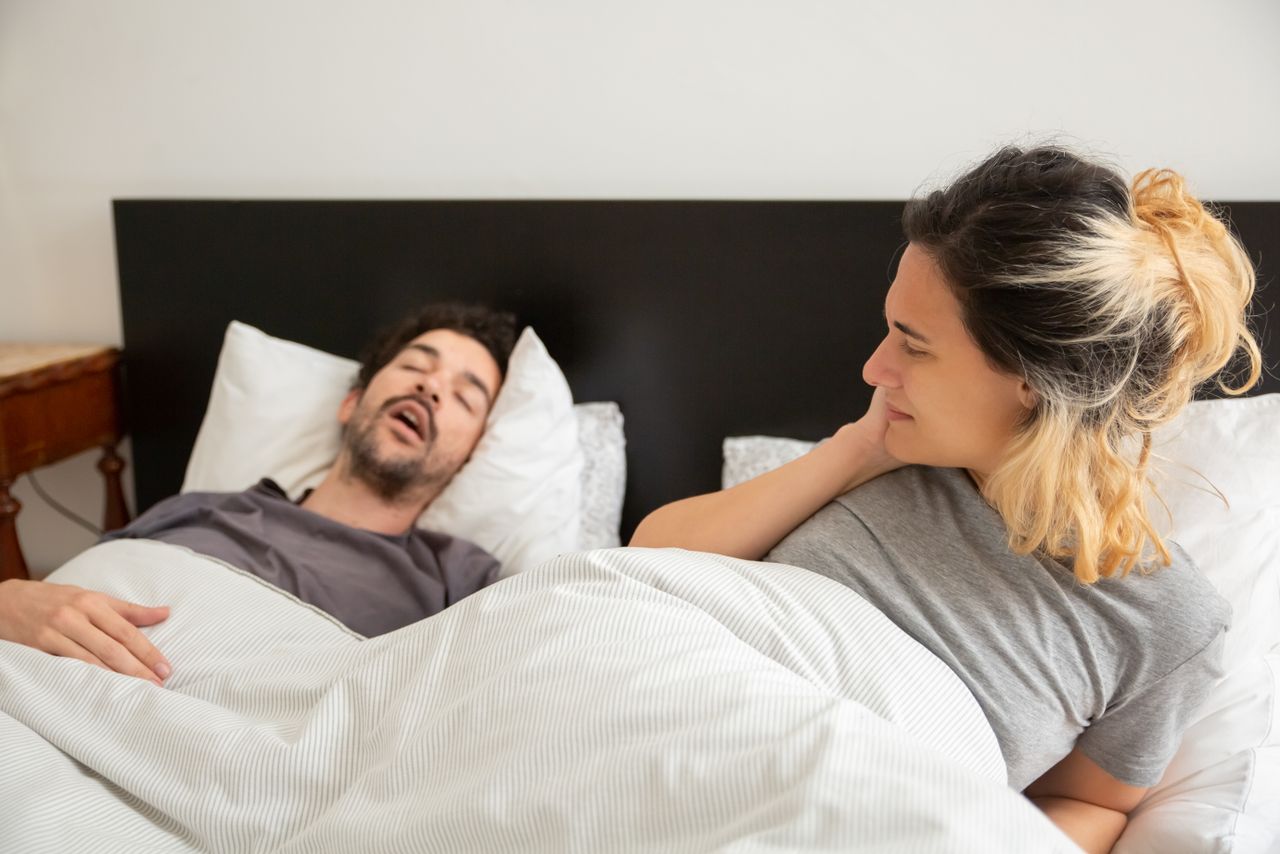
Man snoring on his back while the woman beside him lies awake looking at him
Photo: Kampus Production, Pexels

Snoring is low and uneven, and owners find deep-inserted foam blocks the most of it: here, Howard Leight MAX and Flents Quiet Time, both 33 dB NRR by their makers.

  • A long-time NoisyWorld reviewer finds deep insertion matters more than the box rating.
  • The same reviewer found putty and wax comfortable but too weak for snoring.
  • No earplug silences a very loud snorer; some owners add a white noise machine.

Foam, silicone, wax or reusable earplugs: which type fits you

Each type trades blocking against comfort in its own way.

Foam

Highest maker ratings here: 33 dB NRR

Foam earplugs are rolled thin and expand in the canal. Fitted well, they block the most, snoring included.

Single use, and only as good as your roll and insertion.

Silicone putty

22 dB NRR, per Mack's

Silicone earplugs of the putty kind cover the ear opening, so nothing sits in the canal.

They block less low-frequency noise and pick up hair and lint.

Wax

23 dB NRR, per OHROPAX

Wax earplugs are softened by hand and molded over the opening. Owners say they rarely fall out.

Sticky, single use, and your own voice can sound boomy.

Reusable in-ear

21 dB NRR (Loop); 27 dB average (Alpine)

Reusable earplugs sit low on soft tips, which side sleepers like. Clean them and replace tips as the maker advises.

Finding your size takes trial and error, and they block less than deep foam.

What NRR really tells you

A lab figure on the box: useful for comparing, but fit decides the rest.

The US label rule, in one line

Source: the EPA labeling rule (40 CFR 211.204-4), based on continuous noise.

  • OSHA calls the NRR a lab estimate rarely reached in real use, because fit decides how much a plug blocks.

  • Loop's 27 dB SNR is a European scale, and Alpine's 27 dB is its own average: neither is an NRR.

More on noise ratings

The NRR is the Noise Reduction Rating a US label must carry. Under the EPA's rule, the noise reaching your ear when a plug is worn as directed is roughly the A-weighted noise level minus that number.

A long-time reviewer at NoisyWorld reports getting far more from a 29 dB foam that sealed in his ears than from a 32 dB plug that never did.

How to get a good fit

Each maker's instructions come first; these are the steps they share.

  • Foam: roll, pull, holdRoll it thin, pull the top of the ear up and back, slide it in and hold while it expands.
  • Putty and wax: cover onlyPress it flat over the opening, hair out of the way; never push it into the canal.
  • Reusable: try every sizeStart in the middle size; your two ears can take different sizes.

Foam steps from Howard Leight's and Flents' instructions; cover-only from Mack's and OHROPAX.

Safety notes for sleeping in earplugs every night

We don't give medical advice; each note names its source.

  • Cleveland Clinic lists frequent earplug use as a risk factor for earwax buildup, and advises seeing a provider for pain, fullness, ringing or hearing changes.

  • Keep earplugs away from infants and small children: Mack's, Howard Leight and Flents labels warn that a plug caught in the windpipe may interfere with breathing or cause choking.

  • Sleep Foundation notes muffled sound can make you less likely to wake for an alarm or a crying child.

  • Sleep Foundation warns against pushing a plug too deep or pulling it out fast.

  • Sleep Foundation says to clean or discard plugs as the maker directs.

  • Which? advises resting your ears between uses and not using cotton balls or tissue as earplugs.

Earplugs for sleeping: FAQ

Short answers, with the source named where it matters.

What are the best earplugs for sleeping?

It depends on what keeps you up. Side sleepers: Loop Dream. Next to a loud snorer: Howard Leight MAX or Flents Quiet Time, both rated 33 dB NRR by their makers. Nothing in the ear canal: Mack's Pillow Soft or OHROPAX Classic. A reusable plug for voices and thin walls: Alpine SleepDeep.

Is it safe to sleep with earplugs every night?

We don't give medical advice. Cleveland Clinic lists frequent earplug use as a risk factor for earwax buildup and advises seeing a provider for ear pain, fullness, ringing or hearing changes. Sleep Foundation notes that muffled sound can make you less likely to wake for an alarm or a crying child.

Sources: Cleveland Clinic, Sleep Foundation
Are reusable earplugs good for sleeping every night?

Owners like them for side sleeping and for having one pair to clean and reuse. The trade-offs are care and wear: Loop advises new Dream tips about every 100 nights, Alpine says SleepDeep can be reused about 100 times, and Sleep Foundation says to clean or discard plugs as the maker directs. Foam is made to be replaced, and Mack's putty lasts up to five uses.

How do you put in earplugs for sleeping?

Foam: roll it into a thin cylinder, reach over your head to pull the top of the ear up and back, slide the plug in and hold it while it expands. Silicone putty and wax: press them over the ear opening only; Mack's and OHROPAX both say never to push them into the canal. Reusable plugs: try each tip size, because your two ears can take different sizes. See more on fit.

What can I use instead of earplugs for sleeping?

Some people prefer sleep earbuds or headbands that play sound, or a white noise machine that masks noise instead of blocking it. Which? advises against using cotton balls or tissue as earplugs.

Source: Which?
Are there noise cancelling earplugs for sleeping?

Not in the electronic sense. Every earplug on this list is passive: it turns noise down by sealing or covering the ear, and none cancels sound. If you want sound played or masked at the ear, look at sleep earbuds and headbands instead.

Are Loop earplugs good for sleeping?

Owners who sleep on their side report that Loop Dream stays comfortable on a pillow. Loop rates it at 21 dB NRR. The catch: finding the right tip size takes trial and error, Loop advises new tips about every 100 nights, and it softens noise rather than silencing it. Read the Loop Dream review.

What does NRR mean on earplugs?

NRR is the Noise Reduction Rating on US labels. Under the EPA labeling rule, the noise reaching your ear when the plug is worn as directed is roughly the A-weighted noise level minus the NRR, and the figure is based on continuous noise. OSHA calls it a laboratory estimate that is rarely reached in real use, because fit decides how much a plug blocks.

Sources: EPA (40 CFR 211.204-4), OSHA